

How to Evaluate a Platform-Written Spec
In which I find that a platform-published spec's omissions track financial incentives.
I've been running an AI-assisted editorial pipeline for about a month now. Seven stages. Two competing model drafts per topic. Automated fact-checking. Automated copy editing. Governed inputs from a curated news-gathering system. Twenty published articles on aeshift.com.
Every single article required factual corrections that the automated verification missed.
Not formatting issues. Not stylistic quibbles. Factual errors: wrong OWASP ranking numbers, fabricated implementation details about real products, a seven-month-old patched CVE presented as a current threat. The models had the correct source material in context. They produced confident, specific, wrong details anyway.
This is the verification gap, and it's the hardest unsolved problem in AI content pipelines today. Not because organizations can't build verification steps (they can, and many do), but because the category of error that matters most is the one automated verification is worst at catching.
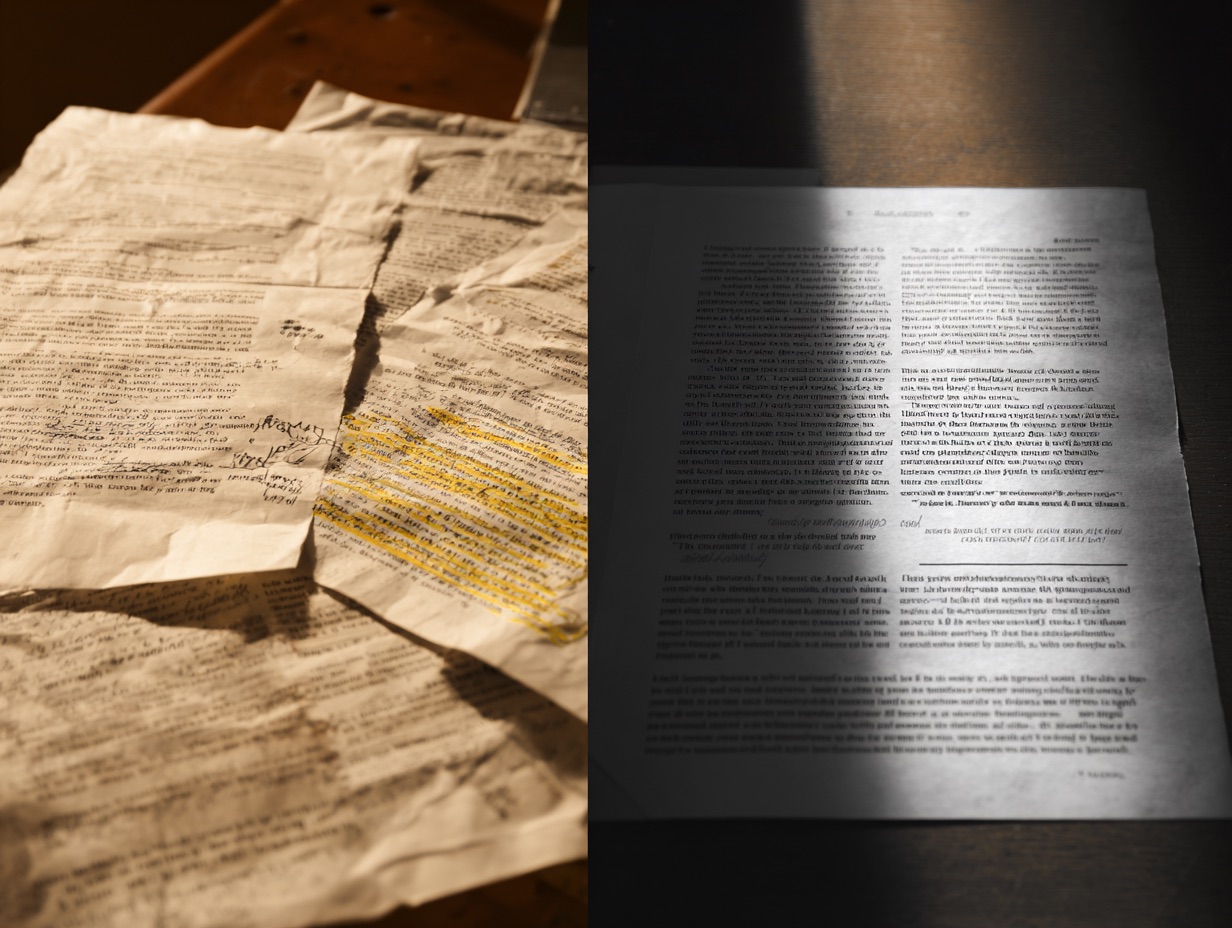
(And yes, the hero image is misspelled and the stamp doesn't make logical sense - the stamp face should be opposite the handle, not perpindicular to it. I had to use this hero image because it illustrates the problem perfectly.)
My pipeline has an automated verification stage. Claude Sonnet fact-checks each draft against the original source material, flagging unsupported claims, overstated generalizations, and speculation presented as fact. It flags some things. But the flags are a mix of genuine issues and false alarms, and evaluating each one is its own cognitive task. I've seen the same pattern in AI code review tools: a mix of real catches and spurious noise that shifts the work from "find the problem" to "triage the flags," which isn't necessarily a net time savings.
This is the thing that keeps me up at night; documentation teams that have automated verification in their AI content pipelines may be overestimating their content correctness. Having a verification step creates confidence that the outputs have been checked. But "checked" and "correct" are not the same thing, and the presence of a verification stage may actually make the problem worse by reducing the scrutiny that humans apply to the output. If your pipeline says "verified," you're less likely to click every link yourself. And for most organizations, that's the point: reduce writer time on writing-related tasks.
But the verification pipeline consistently misses a specific category of error: claims that are technically adjacent to truth but specifically wrong. A patched CVE is a real CVE. NVIDIA OpenShell does exist. The OWASP Top 10 for Agentic Applications is a real document. My verification step confirmed all of these as "accurate." The problem was that the surrounding claims about them (implementation details, announcement contexts, ranking numbers) were fabricated or wrong.
The models don't flag confident assertions as needing verification. They confabulate specific details around accurate seeds, and the result looks exactly like well-sourced writing. The only way I caught these errors was by clicking every link and questioning every specific detail myself. Six rounds of verification on one article. Factual corrections on every single piece across twenty articles, even after the automated verification pass.
And this problem isn't unique to editorial content. I recently participated in a project to create official company skills using AI systems sourcing from verified content. The input content was correct, derived from our human-authored documentation and a human SME-written book about our product. The output went through multiple AI-assisted QA passes: an LLM-as-judge scoring system that evaluates clarity, actionability, token efficiency, and novelty (including flagging content that diverges from training data for human SME review), plus a dedicated skill review workflow that checks for structural issues, scope gating, and content quality.
After all of that automated evaluation, a human subject matter expert still found hundreds of factual errors across 7 skills that took weeks of iteration to correct before publication. The most common categories of issues were incorrect usage of database aggregation pipelines and "best practice" advice that directly contradicted the source material or failed to understand it in context. Syntactically valid, plausible-looking, wrong.
There's a common argument that these problems are fundamentally about input quality. Give the model better source material, more structured context, richer reference documents, and you'll get reliable output. Garbage in, garbage out; therefore, govern your inputs and the problem goes away.
This is intuitive and partially true. Richer inputs do produce better first drafts. But "better first drafts" is not the same as "reliable output," and the difference matters for production content.
My pipeline's inputs are governed. Sources are curated and scored. Each topic goes through a landscape scan before drafting. The drafting prompt includes an editorial style guide, few-shot examples, and up to 12,000 characters of source content. This isn't a "paste a link into ChatGPT" workflow.
The errors occurred despite all of that, with the source material directly in the prompt. The model read the OWASP document. It had the CVE details. It had the NVIDIA OpenShell documentation. It still produced wrong ranking numbers, misleading framing, and fabricated implementation specifics. The input was correct. The output wasn't. That's not a garbage-in problem. That's the model confabulating confident details in the gaps between what it was given.
Research supports this. A study on nonstandard errors in AI agents ran 150 autonomous Claude Code agents on the same dataset with the same instructions. Same inputs, same governance, same structure. The agents produced divergent outputs because of methodological differences in how each agent approached the work. Controlled inputs did not produce controlled outputs.
The specification gap research found that splitting coding work across two agents causes a 25 to 39 percentage point accuracy drop, and better specifications are the only thing that helps. Restoring full specifications recovered performance to 89% (the single-agent ceiling), which shows that input quality matters. But 89% is not correctness. And the 11% gap between that ceiling and full accuracy persists regardless of how good the specifications are. Better inputs raised the floor; they didn't close the gap.
It gets worse. Many organizations use AI to verify AI-generated content. A model generates a draft; another model (or the same model in a subsequent pass) reviews it for accuracy.
The research on this is extensive and the findings are consistent: LLM evaluators are structurally biased in ways that favor the content they're reviewing. This isn't a comprehensive list, but rather an illustration of a few of the ways in which the evaluation bias manifests:
Self-attribution bias: when an LLM monitor reviews actions framed as the model's own prior output, it systematically rates them as more correct and less risky than identical actions in a neutral context (Khullar et al., 2026). The bias isn't fixed by prompting the monitor to "be critical." Monitors sharing conversational context with generators become lenient.
Self-preference bias: LLMs recognize and favor their own outputs over those from other models and humans (Panickssery et al., NeurIPS 2024 Oral). This isn't a coincidence or a confound. The researchers demonstrated a causal relationship: fine-tuning a model to increase its self-recognition ability directly increased its self-preference bias. The model prefers text that looks like text it would produce.
Family bias: GPT-4o and Claude 3.5 Sonnet both assign higher scores to outputs from models in their own family (Spiliopoulou et al., 2025). This matters because a common mitigation is to use a different model for verification. If your pipeline generates with Claude Opus and verifies with Claude Sonnet, you haven't escaped the bias; you've just moved it to the family level.
Evaluator blind spots: when researchers deliberately introduced quality problems into 2,400 answers across 22 perturbation categories, evaluator LLMs failed to detect the degradation in over 50% of cases (Doddapaneni et al., 2024). These were deliberate perturbations to factual accuracy, coherence, and reasoning, not the subtle naturalistic errors that occur in production. If evaluators miss more than half of intentionally degraded content, the miss rate on the kind of confident, specific, plausible-sounding errors that production pipelines actually generate is likely worse.
These biases compound. A pipeline where Claude generates content, Claude verifies it in the same conversation thread, and Claude evaluates the quality score is subject to self-attribution bias, self-preference bias, and family bias simultaneously, with a base miss rate on quality problems that exceeds 50%. The architecture itself creates systematic leniency at every layer.
One practitioner recently claimed ~85% quality from an AI-driven QA pipeline. The research suggests that number is inflated by multiple independent mechanisms. The question isn't what percentage passes automated review. It's what percentage would pass a human reviewer clicking every link and checking every specific claim.
Even setting aside verification bias, AI pipelines have failure modes that don't announce themselves. The research I've been tracking on aeshift and through my agent-friendly docs work surfaces these consistently.
Silent truncation: when an agent fetches a long web page, the content may be silently truncated before the model sees it. Claude Code truncates at ~100K characters; the MCP Fetch reference server defaults to just 5K. In many cases, the model doesn't know it's working with incomplete information. It fills in the gaps from training data, and the output looks complete. I've observed this directly when Claude truncated a Vercel sitemap and confidently reported that no documentation URLs existed in it, when in fact it was seeing only a subset of the data. The agent-friendly documentation spec I've been developing documents this and related failure modes extensively.
Sub-agent fallback: agents without access to specific tools or permissions silently fall back to training data instead of reporting that they couldn't complete the task. Your pipeline thinks it fetched and verified a source. The agent actually generated a plausible response from parametric memory. Nothing in the output signals that this happened.
Cross-contamination: when agents process mixed context (multiple source types, multiple languages, multiple document formats), the content interferes with itself in ways that input governance can't predict. I studied this directly in my analysis of 673 agent skills, where I identified six different interference mechanisms that degrade model output. The one most relevant here is API hallucination: when a model receives partial API knowledge (naming conventions, architectural patterns) without comprehensive documentation, it fabricates plausible but nonexistent methods and parameters. I wrote a case study about it. Skills providing pattern-level API guides had fabrication rates of 29-42% on flagged issues, while skills with comprehensive reference files showed near-zero fabrication.
Structural quality metrics didn't predict behavioral degradation at all (r = 0.077 across 19 skills). The things you can measure about your inputs (language labeling, structural compliance, contamination risk scores) have essentially no correlation with what actually goes wrong in the output. Governing your inputs is necessary but not sufficient; the degradation comes from somewhere your governance metrics aren't looking.
These aren't edge cases. They're structural properties of how language models process information, and every pipeline that uses AI agents for content generation is susceptible to them.
If governed inputs and AI verification were sufficient, several entire product categories wouldn't need to exist. But they do.
Guardrails frameworks. Evaluation platforms. Agent monitoring tools. Runtime verification systems. Structured output validators. Each of these represents a company (or many companies) that identified a gap between what AI pipelines produce and what production systems require, and built a product to fill it. The venture capital flowing into AI reliability tooling is, itself, evidence that the people closest to the problem don't consider it solved.
Spec-driven development tooling is a good example of this signal. AWS shipped Kiro, an IDE that enforces a requirements-to-tasks pipeline before the agent writes code. GitHub open-sourced Spec-kit to layer specification workflows on top of existing coding agents. Tessl raised $125M to build a spec registry so agents can consume shared, versioned specifications instead of hallucinating API contracts. Three companies, three approaches, all converging on the same premise: agents without sufficient specification produce unreliable output. Research on multi-agent coordination quantifies part of why, but the market signal is broader than any single paper. These companies exist because governed inputs alone don't produce governed outputs.
The research tells the same story. I've been running an AI research pipeline for about a month, tracking emerging themes from arXiv papers, product launches, and industry coverage. In that single month, the pipeline has surfaced 36 distinct research themes. Half of them (18) are directly about AI accuracy, reliability, or verification gaps: invisible failure modes in agent systems, knowledge conflicts when context contradicts training data, the gap between structural quality metrics and actual behavioral correctness, formal verification methods for LLM-generated code, failure mode detection techniques, bias in how LLMs evaluate code, multi-agent trust and coordination problems, benchmarking methodologies that reveal failures hidden by standard evals.
And that's one month of papers from one pipeline. The actual body of research is far broader.
This matters most where accuracy matters most, and there aren't many content types where accuracy matters more than product documentation.
Editorial content (like what I produce on aeshift) has some margin for opinion and interpretation. If an editorial take is slightly off, the consequence is a correction. Product documentation doesn't have that margin. If a code sample is wrong, a user's integration breaks. If an API parameter description is fabricated, developers build against something that doesn't exist. If a migration guide skips a step because the model silently truncated the source, users lose data.
Organizations that are downsizing technical writing teams in favor of AI content pipelines are making a bet that their verification processes catch the errors that matter. The research says those verification processes have structural biases that make them systematically lenient, invisible failure modes that don't surface in QA metrics, and a category of confident-but-wrong errors that automated systems are worst at detecting.
I'm not arguing that AI can't help with documentation workflows. I use it daily, across multiple projects, for exactly that purpose. But when organizations describe their AI content pipelines as "highly automated" and "reliably high-quality," and those quality claims are based on metrics subject to the biases documented above, the practical result is reduced human oversight. Nobody has to say "fully autonomous" for headcount decisions to follow from inflated quality numbers. The verification gap is real, it's well-documented in current research, and the people building tools to address it are raising hundreds of millions of dollars because the problem is hard.
If:
You don't know whether you have a verification gap.
The research and VC spend in this problem domain suggests that you do.
In which I find that a platform-published spec's omissions track financial incentives.
In which I use AI to help draft content, and discover its limitations.
In which I build a system to filter AI-related content.